“Brother’s got high cheekbones!”
“Sister’s hair’s jet black and straight!”
“Granddaddy looks like Geronimo!”
I’ve heard such nonsense all my life as relatives, without proof, claimed Native American ancestry. Officially, we’re white, “but we got Indian blood in us from way back.” In 2015, a Pew Research Center study revealed that at least half of all U.S. adults who identify as multiracial are whites claiming Native American ancestry—that’s 8.5 million people. In a 2016 Fusion.net article, Native Peoples magazine editor Taté Walker pointed out the obvious. For that many whites to have Native American ancestry, American Indians would have to be “getting it on with everybody.”
Some claims of native ancestry are legitimate. Most others, not so much—and there’s a name for the people making such erroneous claims: Pretendians.
Claiming native ancestry isn’t new, but white claims of being a quarter or less Native American have skyrocketed in recent years. Asked for proof, those claiming ancestry resort to family lore and physical attributes like high cheekbones. Moreover, these wannabe Indians readily feign extensive knowledge of whatever tribe they claim. They buy, display, and wear stereotypical garb and trinkets as though every Indian in America purchased their clothes and jewelry at some Arizona interstate tourist trap, but these Pretendians have no experience in native culture. Instead, they profess nativeness, especially on social media, by coining outlandish “Indian” names like Howling Wolf Tree, Badger Womyn, and Eagle Feather Heart. (Get your own ridiculous “Indian” handle with the online name generator at http://www.lingerandlook.com/Names/FictionNames2.htm.) If their claims are questioned, Pretendians shore up their authenticity with inaccurate knowledge of Indian culture and history based on popular myth and stereotypes, demonstrating little or no fact-based understanding of past or present native issues. They will even attack true native descendants as imposters to make themselves appear genuine.
A few years ago, a distant relative who’s researched our mutual genealogy put authority to our family’s claim to native heritage, purportedly discovering two Muscogee women in my paternal grandfather’s ancestry. “I’m still working on documenting it, but, after all,” he told me, “we have a great-great-great grandfather who traded with Indians up and down the river.” How trading anything other than a certain bodily fluid gets native genetics into a person’s DNA is beyond my understanding, but the claim, he insisted, was genuine and only needed official confirmation. We could now check with clear conscience those white and Native American ethnicity boxes on job and other applications.
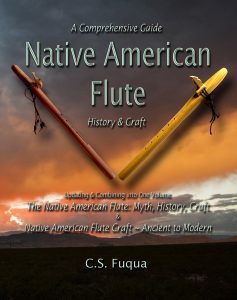
White folks claim native ancestry for a variety of reasons, including a romanticized view of native culture and people. Take the Native American flute as example. It’s an instrument that’s mystical, haunting, spiritual. It touches our ancient soul. According to one of several creation myths, it was given to native men for use in courting women, a fairytale now accepted by most as fact. Besides misogynistic, the myth-as-history is preposterous. In reality, the flute’s place in native culture was and remains broad, from entertainment to courting to fertility rites to greeting visitors—like any other instrument ever made in any other culture. The story, however, fits well into the Pretendian narrative that embraces myths promoted by European invaders, myths designed to undermine native women’s cultural status. Europeans ensured general acceptance of chosen myths-as-history through systematic destruction and replacement of native culture and values with European nonsense now accepted by many Pretendians as fact.
Based on assumed nativeness, Pretendians have even developed a sense of political correctness regarding aspects of their claimed heritage. When I began crafting native flutes some thirty years ago, the instrument was known simply as a Native American flute. In recent years, a movement among mostly Pretendians contends that Native American flutes can be crafted only by Native Americans. If you’re non-native and claim no native ancestry, the flute you make must be termed a Native American style flute. If we accept such skewed logic, then non-Europeans can craft only a recorder style flute, and non-Spaniards can make only Spanish style guitars.
By far, Cherokee is the most claimed of all Native American ancestry. The 2000 U.S. federal census reported that 729,522 Americans claimed Cherokee heritage. By 2010, the number had increased to 819,105, some 70 percent of them—white folks—declaring mixed race. I grew up in southern Alabama and northwest Florida, so this statistic is no surprise. Bring up native culture in conversation, and someone will claim native heritage. Nine out of ten times, that heritage will be Cherokee, usually “traced” to an Indian princess—never mind that no such tribal status ever existed.
Throughout the country’s history since the European invasion, Americans have used mixed-race status for personal advantage. For example, a person with African American and white heritage who looked white would usually pass as white to avoid discrimination as she or he rose in society as only whites could do. Even today, most people who have less than twenty-eight percent African-American ancestry, according to a 2014 23andMe genetics study, claim white-only heritage. Conversely, whites are increasingly quick to claim native ancestry in an effort to gain perceived minority advantages in employment or scholarships. Making the claim is easy. Since 2000, the Census Bureau has allowed people to check multiple boxes for race and ethnicity without proof.
This kind of ethnic multi-checking has created an alternate reality for native heritage. Until recently, tribes determined membership on whether a person spoke the language and followed cultural practices which defined cultural affinity with the tribe. As white claims rose, blood quantum became the standard determinant. If one grandparent, for example, belonged to a tribe but the other three grandparents did not, a person was considered to have one-quarter blood quantum. Before 1963, the Eastern Band of Cherokee Indians allowed anyone with at least one-thirty-second blood quantum (one great-great-great native grandparent) to join the tribe, but the claim had to be documented. You couldn’t just check a box. After 1963, the standard increased to one-sixteenth.
Before the mid-1800s, the Cherokee were the southeastern U.S.’s most populace tribe, numbering around 16,000. But they had something whites wanted—land for farming and gold mining. And let’s not forget racial prejudice. These were local Indians after all, substandard humans in the European mindset. To appease white desire, the U.S. government in 1838 and 1839 forcibly removed the southern Cherokee to the Indian Territory in what later became Oklahoma. After removal and as tensions rose between north and south in the run-up to the Civil War, whites realized an advantage in claiming Cherokee ancestry, insisting these claimed ancestors had escaped forced removal to hide, remain, and marry in the south. Official records, however, indicate that few, if any, Cherokee escaped removal, although 4,000 died on the Trail of Tears en route to the Indian Territory. Claiming Cherokee ancestry enabled southerners to step out of their role as oppressor by legitimizing themselves as native born rather than of European origin. The claim thereby relieved them of guilt for what they’d done to the actual Cherokee and established a delusional native right to defend their despotic system of slavery from an “aggressive” federal government.
This delusional mindset has had a long shelf life. It’s evident today in southern Pretendians’ defense of the rebel battle flag as heritage not hate and their unyielding support of political candidates who promote xenophobic and racist ideology. Claiming ownership of an imagined native past allows these whites to forgive themselves for their European ancestors’ aggression against native peoples and their own present-day assaults against different cultures, races, and ethnicities.
Claimed ancestry became a political issue in 1924 when Virginia politicians were forced to address matters of mixed-race rights. The state’s Racial Integrity Act at the time banned marriage between whites and members of any other race, defining people as white only if their “blood is entirely white, having no known, demonstrable, or ascertainable admixture of blood of another race.” That put a kink into claims of ancestral links to Pocahontas by prominent white Virginia families. Generationally, if the claims were true, it meant family members were at most one-sixteenth native. The Virginia legislature therefore amended the Racial Integrity Act with the “Pocahontas Exception,” allowing white families to claim native ancestry to Pocahontas but still be classified as white. Conversely, those with one-sixteenth African American ancestry could not claim white status and remained designated as black.
According to Native American journalist Mary Annette Pember, claims to Cherokee ancestry went nationwide during the twentieth century, thanks to Tinsel Town. Hollywood movies made the Cherokee acceptable to people outside the South by civilizing the tribe. In 1971, a popular Keep America Beautiful ad campaign established Iron Eyes Cody, The Crying Indian, as the quintessential image of Native America, a tear rolling down his cheek as he mourned environmental destruction. Cody famously traced his heritage to the Trail of Tears and a Cherokee grandfather who purportedly worked with the Confederate outlaw band, Quantrill’s Raiders. Cody made no personal claim to glory, however, calling himself just another Injun who left the reservation to find success in Hollywood. After he’d portrayed Indians in more than 200 films, the public discovered that Iron Eyes Cody’s heritage did not trace to the Trail of Tears after all, that he’d never lived on a reservation, that he was actually Espera Oscar de Corti, a Louisiana-born actor with 100 percent Sicilian ancestry—not a drop of Indian blood.
The three federally recognized Cherokee tribes—Untied Keetoowa Band, Cherokee Nation, and the Eastern Band of Cherokees—have a combined population of 344,700 members, most living in close-knit communities in eastern Oklahoma and North Carolina’s Great Smoky Mountains. Although becoming a Pretendian may seem harmless, it has consequences beyond a wink and snicker. In the workplace, whites can be hired based in part on claimed heritage, taking a position that should be filled by someone of true native heritage. Iron Eyes Cody is a good example. His success in playing an Indian prevented true Native Americans from landing roles that should’ve been theirs.
To address increasing claims of ancestry, the Cherokee Nation has created a task force to deal with false assertions by individuals seeking official recognition, leading one investigator to theorize that many Pretendians are simply seeking a sense of place and connection. The problem is, the only way some know how to achieve such connection is to buy it and own it. Heritage is not such a commodity.
Pretendians may be fully sincere in their romanticized native view of nature and spirituality. Their appeal vanishes, however, when they use their nativeness to justify or forgive disturbing personal traits. Sociologist Herbert Gans in 1979 coined the phrase symbolic ethnicity to describe the act of white Americans claiming native identity without changing behavior or suffering social consequences. The practice is pervasive, exemplified by Native American heritage clubs that have no members of documented ancestry and by Pretendians claiming heritage for reasons of employment or scholarship benefits. For them, ethnicity is voluntary, a piece of clothing that can be put on or taken off at will, unlike skin.
As America becomes more racially and ethnically diverse, whites unwilling to accept their changing status search for a collective identity of ancestral place and culture to link to the world they live in and to justify personal racism toward other groups. The 2016 presidential election provided a champion for many whites who claim Native American ancestry, encouraging and inflaming racism and xenophobia without regard to decency, empathy, or societal norms. Many Pretendians on social media professed steadfast support for Native Americans protesting the Dakota Access Pipeline (DAPL) while vehemently condemning similar groups such as Black Lives Matter and opposing anti-discrimination legislation designed to protect women, people of color, and LGBTQ individuals.
For all the claims of indigenous blood, ancestry no longer needs to be a mystery. We can easily determine by DNA analysis whether we have native ancestry—which is exactly what I did a few years ago. Forget those two native women in my paternal grandfather’s ancestry, and don’t give the Indian trader a second thought. Thanks to DNA testing, I know the truth. I’m as white as a person gets.
When I informed the relative who’d “discovered” the perceived native ancestry, he replied, “Another genealogist in the family feels strongly there’s Indian blood. So we just have to continue to wonder.”
No, we don’t.
Science is a marvelous thing. It doesn’t depend on faith, myth, or family lore. Science relies solely on empirical evidence—like climate change or gravity. Or DNA analysis.
Never mind high cheekbones.
Ignore hair color or texture.
And Granddaddy? He looks like Granddaddy.
Sources
Bryc, Katarzyna et al. “The Genetic Ancestry of African Americans, Latinos, and European Americans across the United States.” The American Journal of Human Genetics , Volume 96 , Issue 1 , 37 – 53.
Cobb, Russell. “Why Do So Many People Pretend to Be Native American?” Longreads, This Land Press, 19 Jan. 2015, blog.longreads.com/2014/08/04/why-do-people-continue-to-fashion-native-identities-out-of-thin-air/.
Day, Meagan. “No, You Are Not Part Cherokee. And Neither Is Elizabeth Warren.” Timeline, 5 July 2016, timeline.com/part-cherokee-elizabeth-warren-cf6be035967e#.lzpra1dux.
Fuqua, C. S. Native American Flute Craft: Ancient to Modern. Cooperative Ink, 2015.
—. The Native American Flute: Myth, History, Craft. Cooperative Ink, 2012.
Garrison, Tim Alan. “Cherokee Removal.” New Georgia Encyclopedia, 19 Oct. 2004, www.georgiaencyclopedia.org/articles/history-archaeology/cherokee-removal.
Hakala, Kate. “Why Do So Many People Claim They Have Cherokee In Their Blood?” Nerve, 27 Nov. 2014, www.nerve.com/life/why-do-so-many-people-claim-they-have-cherokee-in-their-blood.
Hu, Elise. “Minority Rules: Who Gets To Claim Status As A Person Of Color?” NPR, 16 May 2012, www.npr.org/sections/itsallpolitics/2012/05/16/152822762/minority-rules-who-gets-to-claim-status-as-a-person-of-color.
McLaughlin, Michael. “Trump Supports Dakota Access Pipeline. Did We Mention He’s Invested In It?” Huffington Post, 2 Dec. 2016. Web. 21 Dec. 2016, http://www.huffingtonpost.com/entry/trump-dakota-access-pipeline-investment_us_5841d8f9e4b09e21702e8f58.
Moya-Smith, Simon. “The ‘Part Cherokee’ Factor: Pew Survey Misrepresents Indian Country, Critics Say.” Indian Country Today Media Network, 12 June 2015, indiancountrytodaymedianetwork.com/2015/06/12/part-cherokee-factor-pew-survey-misrepresents-indian-country-critics-say-160712.
“Pretendian.” Urban Dictionary, 10 Oct. 2010, www.urbandictionary.com/define.php?term=pretendian.
Pulley, By Anna. “Why Do So Many White People Claim to Be Native American?” Fusion, 11 Mar. 2016, http://fusion.net/story/279637/white-people-claiming-native-identity/.
Siek, Stephanie. “Who’s a Native American? It’s Complicated.” Cable News Network, 14 May 2012, inamerica.blogs.cnn.com/2012/05/14/whos-a-native-american-its-complicated/.
TNO Staff. “White Americans have Remained ‘Shockingly European’ Despite Decades of Pro-Racial Mixing Propaganda, New DNA Study Reveals.” The New Observer, 14 Jan. 2015, newobserveronline.com/white-americans-remained-shockingly-european-despite-decades-pro-racial-mixing-propaganda-new-dna-study-reveals/.
Zimmer, Carl. “White? Black? A Murky Distinction Grows Still Murkier.” The New York Times, 24 Dec. 2014, www.nytimes.com/2014/12/25/science/23andme-genetic-ethnicity-study.html?_r=0.
[arrow_forms id=’99’]